Is your walk-in freezer quietly doing its job — or is it slowly costing you money, food quality, and customer trust? Commercial freezer maintenance is one of those topics nobody gets excited about, yet it directly affects uptime, operating costs, compliance, and safety. If you manage food service, pharmaceuticals, logistics, or any cold-chain operation, getting this right is not optional. It is a core operational discipline.
In this article, we will walk through what commercial freezer maintenance really involves, why it matters, how to structure it, and how modern features and monitoring tools can make it easier and smarter.
Why commercial freezer maintenance matters
Commercial freezers are not consumer appliances. They operate 24/7, under heavy load, in harsh environments, and with tight temperature tolerances. Without consistent commercial freezer maintenance, small issues quickly escalate into:
Temperature drift and product spoilage
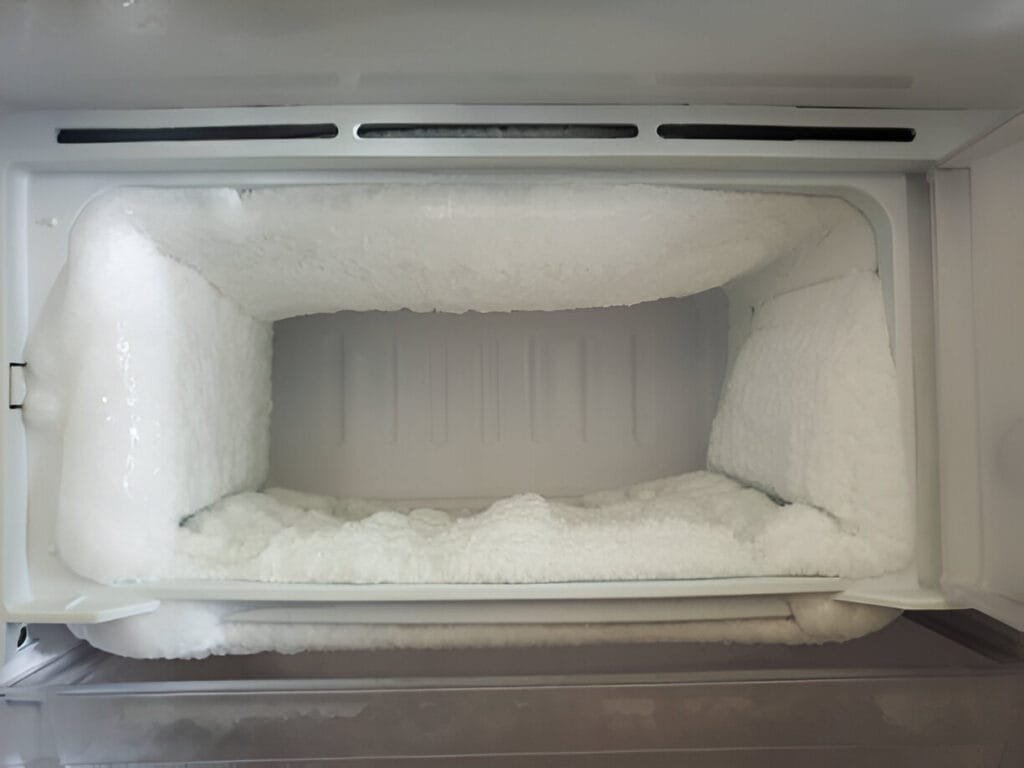
Ice buildup and airflow restriction
Higher energy consumption
Compressor failure and emergency downtime
Compliance violations in regulated industries
Put simply: preventative maintenance costs less than reactive repair.
Business risks of neglect
Risk
Impact
Typical cost
Product loss
Spoiled inventory
High
Energy waste
Rising utility bills
Medium
Downtime
Lost service and revenue
High
Regulatory issues
Fines or closures
High
A structured commercial freezer maintenance plan protects against all of these.
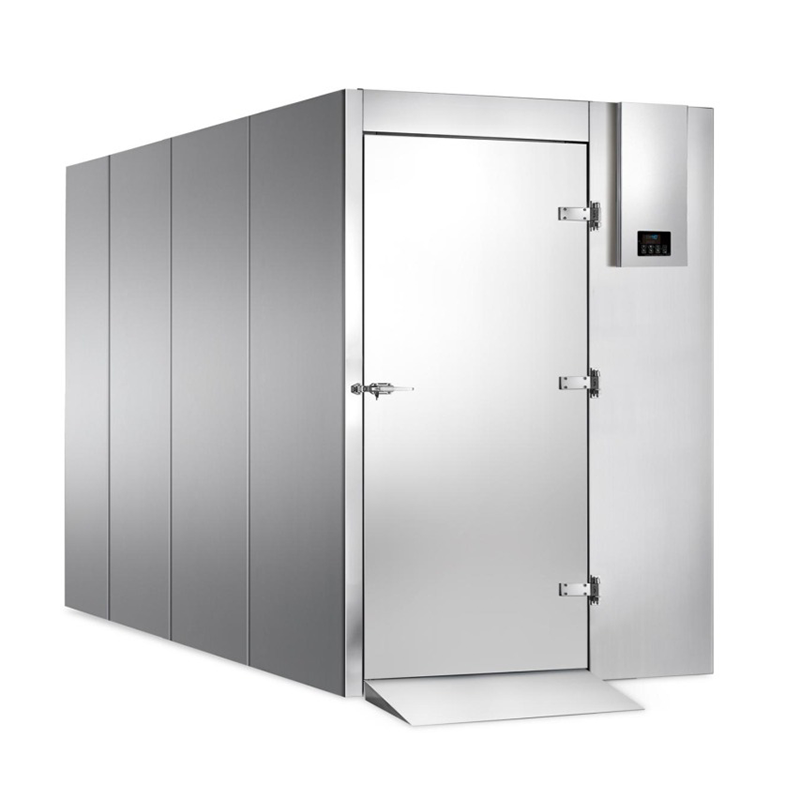
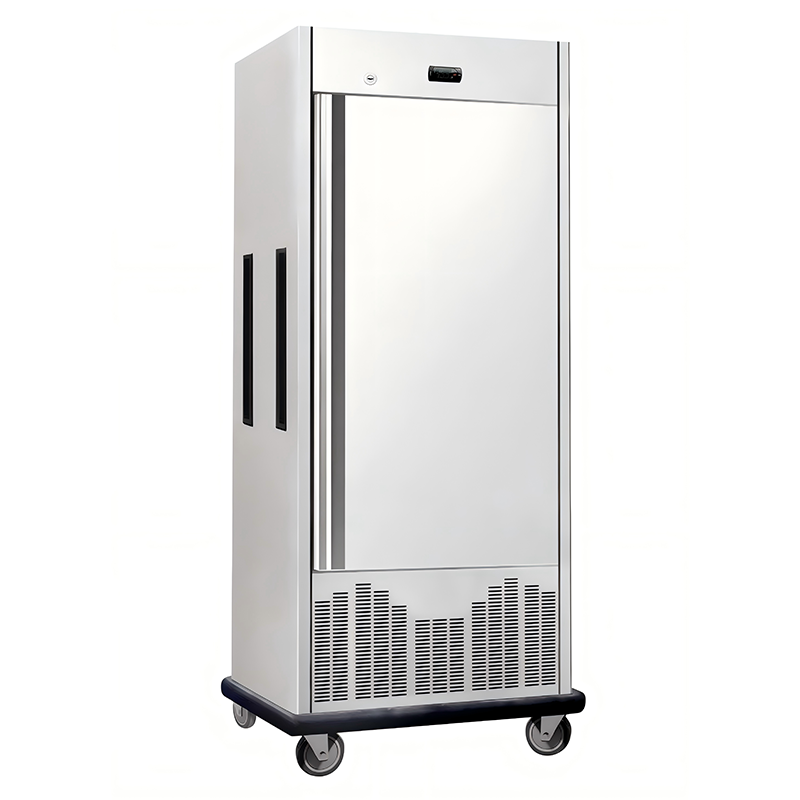
This stainless steel triple trolley roll – in blast freezer rapidly freezes large quantities of food, ideal for restaurants, central kitchens, and food processing plants.
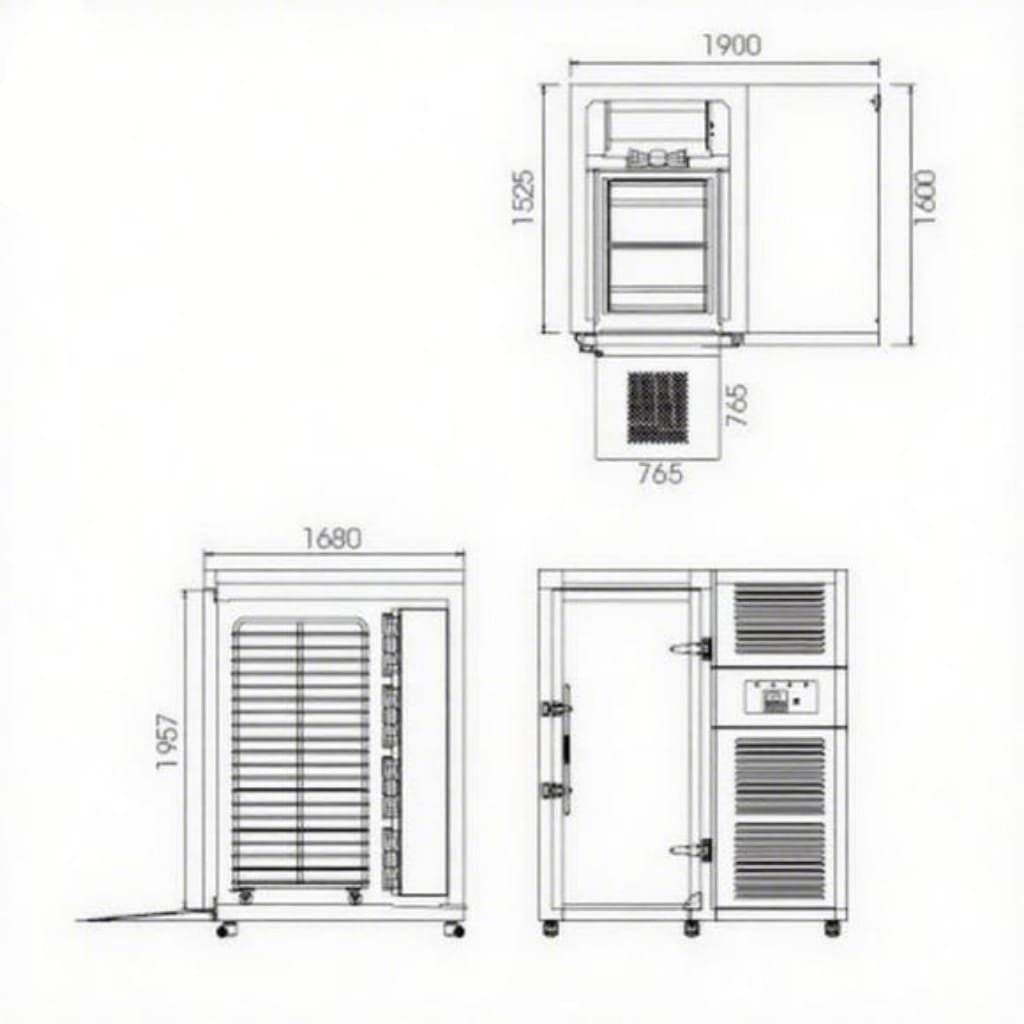
Engineering drawing of a single – door trolley roll – in blast freezer, with multi – view dimensions — essential for manufacturing, installation, and food freezing planning.
Key components of commercial freezer maintenance
A professional maintenance routine focuses on a few critical systems. Each one supports temperature stability and efficiency.
1. Refrigeration system
This includes the compressor, condenser, evaporator, and refrigerant lines.
Regular tasks:
Inspect refrigerant levels
Check for oil or refrigerant leaks
Verify compressor cycling behavior
Low refrigerant or oil contamination reduces cooling capacity and strains the compressor — a leading cause of catastrophic failure.
2. Airflow and heat exchange
Clean heat transfer is essential.
Condenser coils must be free of dust and grease.
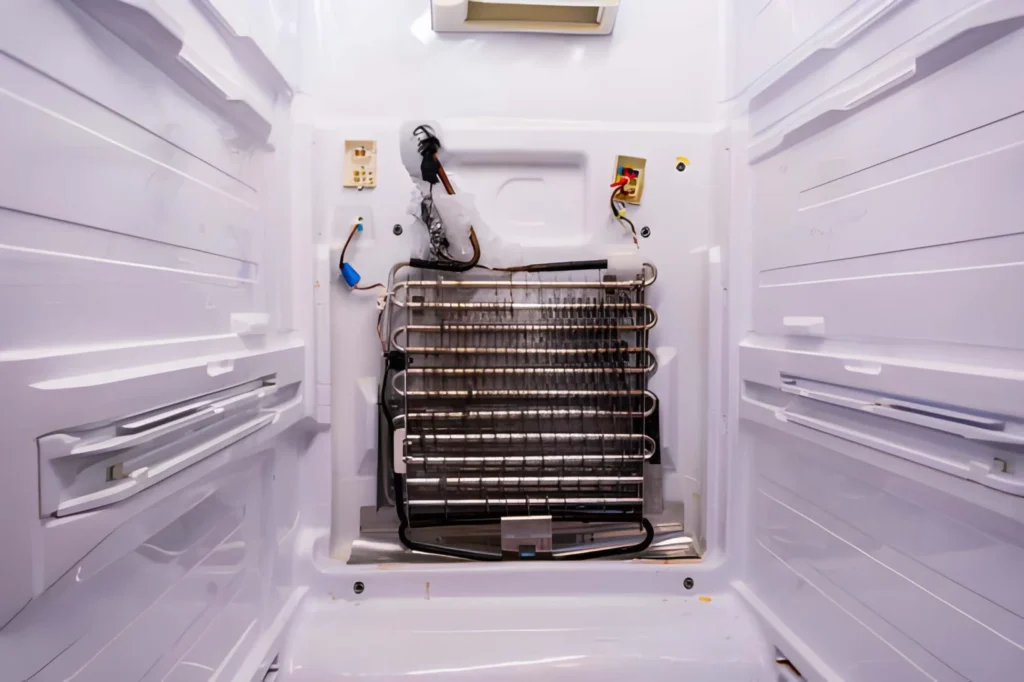
Evaporator coils must be free of ice buildup.
Fans must rotate freely and quietly.
Blocked airflow makes the system work harder, which raises energy use and shortens equipment life.
3. Doors, seals, and insulation
Even a small air leak allows warm, moist air into the freezer.
Inspect gaskets for cracks or stiffness.
Check door alignment and closure.
Replace worn seals immediately.
Air infiltration is one of the most overlooked drivers of energy loss in commercial freezer maintenance.
4. Electrical and control systems
Controls manage temperature, defrost cycles, and alarms.
Calibrate temperature sensors.
Verify control board readings.
Test alarms and safety cutoffs.
A sensor reading 2°C off can quietly destroy sensitive inventory.
Maintenance frequency by freezer type
Not all freezers require the same maintenance cadence.
Freezer type
Typical environment
Maintenance frequency
Walk-in freezer
Back-of-house, heavy traffic
Monthly
Reach-in freezer
Retail or kitchen
Quarterly
Blast freezer
High thermal stress
Monthly
Ultra-low freezer
Labs, pharma
Monthly + calibration
Adjust frequency based on:
Ambient temperature
Door opening frequency
Product sensitivity
Regulatory requirements
Your commercial freezer maintenance plan should be risk-based, not generic.
Smart features changing commercial freezer maintenance
Modern systems now include smart monitoring that transforms maintenance from reactive to predictive.
Common smart features
Remote temperature monitoring
Cloud-based data logging
Predictive failure alerts
Energy consumption tracking
Automatic compliance reporting
Instead of waiting for failure, you receive alerts when performance drifts.
Benefits of smart monitoring
Benefit
Result
Early fault detection
Fewer breakdowns
Energy optimization
Lower operating costs
Compliance support
Easier audits
Remote visibility
Faster response
Smart technology does not replace commercial freezer maintenance — it makes it more effective.
Energy efficiency and operating cost control
Freezers are among the highest energy consumers in most facilities.
Poor maintenance increases:
Compressor runtime
Defrost frequency
Heat rejection inefficiency
Energy-focused maintenance actions
Clean condenser coils regularly.
Verify door seals.
Ensure defrost cycles are optimized.
Monitor kWh consumption per unit.
Tracking energy data alongside performance allows you to identify when maintenance is needed before failure occurs.
Regulatory and compliance considerations
In food service, pharma, and medical storage, commercial freezer maintenance is not just best practice — it is required.
Typical standards include:
HACCP
FDA CFR 21 Part 11 (pharma data logging)
ISO 22000 (food safety)
GMP and GDP guidelines
Documentation matters. You should maintain:
Service logs
Calibration certificates
Temperature records
Alarm testing records
Well-documented maintenance reduces legal exposure and simplifies audits.
In-house vs outsourced maintenance
Should you handle maintenance internally or use a service provider?
Option
Pros
Cons
In-house
Fast response, lower per-visit cost
Requires expertise
Outsourced
Specialized skills, compliance support
Ongoing contracts
Many businesses use a hybrid approach: routine inspections in-house, major servicing outsourced.
If you are unsure what model fits your operation, it often helps to talk with a specialist and map risk vs cost. If you want, you can always contact us for a quick assessment or request a quote tailored to your freezer fleet.
Building a simple maintenance checklist
A practical commercial freezer maintenance checklist might include:
Daily
Verify temperature readings
Check for unusual noise or vibration
Inspect doors for proper closure
Weekly
Clean visible condenser surfaces
Inspect gaskets
Review alarm logs
Monthly
Full coil cleaning
Electrical inspection
Sensor calibration check
Quarterly
Refrigerant level inspection
Defrost system testing
Energy usage trend review
Consistency matters more than perfection.
Conclusion
Commercial freezer maintenance is not about avoiding breakdowns alone. It is about protecting product integrity, controlling energy costs, maintaining compliance, and ensuring operational reliability. A freezer that runs quietly, efficiently, and predictably is a strategic asset, not just a utility.
By combining structured maintenance routines, smart monitoring, and clear documentation, you can turn freezer management into a predictable, low-risk process. That means fewer emergencies, lower costs, and more confidence that your cold chain is doing exactly what it should — even when nobody is watching.
If you treat maintenance as part of your core business discipline rather than an afterthought, your freezers will reward you with years of reliable service. And that is a return on investment most businesses are happy to make.
FAQ
What is an electric power meter in cold storage?
An electric power meter measures how much electricity a freezer consumes, usually in kilowatt-hours (kWh). It helps you track energy usage, detect inefficiencies, and verify cost savings after maintenance or upgrades.
Can power meters help with commercial freezer maintenance?
Yes. Power meters reveal rising energy consumption caused by dirty coils, failing compressors, or refrigerant issues. This allows proactive maintenance before a breakdown occurs.
Where should an electric power meter be installed?
It is typically installed on the freezer’s dedicated electrical circuit or integrated into the facility’s sub-metering system to isolate freezer energy usage from other loads.
Do smart freezers include built-in power meters?
Many modern commercial freezers include internal energy monitoring, but external meters are still used for verification, billing allocation, and regulatory reporting.
How accurate are electric power meters?
Most commercial-grade meters have accuracy within ±1%. For energy audits or billing, certified meters should be used.
Is energy monitoring required by regulation?
In some regions and industries, yes — especially where energy reporting or carbon accounting is mandated. It is increasingly part of ESG and sustainability programs.
For businesses, when a freezer ices up, it can disrupt operations and impact equipment lifespan. Addressing the root causes of freezer ice is essential for keeping your freezer running smoothly and ensuring that stored goods remain in optimal condition. This guide explains why commercial freezer Ices up, explores the technical process behind frost formation, and offers practical tips to […]
Reach-in refrigerators are a must-have for any commercial kitchen. From choosing the right type to understanding energy efficiency and costs. this guide helps you make smart decisions that save money and boost performance. Get ready to upgrade your storage with the perfect reach-in refrigerator! What is a Reach-in Refrigerator? A reach in refrigerators is a type of […]
In today’s fast-paced foodservice, retail, and hospitality industries, a reliable commercial refrigerator is crucial for operational efficiency, food safety, and brand image. With so many options on the market, how do you select the best partner for your business? This article compares iColdBox (https://icoldbox.com/) with other leading commercial refrigeration brands such as Haier, ONKOO, and Liebherr. We’ll […]
We use cookies to enhance your browsing experience, serve personalised ads or content, and analyse our traffic. By clicking "Accept All", you consent to our use of cookies.