Knowing the basics of a Glass Door Bar Fridge before you buy it is essential. Most retailers, wholesalers, and importers leave out key details, and many listings ignore information that truly matters.
Demand for display-style refrigeration has grown sharply in the past five years. This growth comes from home renovations and the rise of outdoor alfresco spaces.Yet the industry still lacks people who can guide buyers toward the right glass-door fridge.
This buyer’s guide was created to fill that gap. I hope the information below offers some useful direction.
Key Considerations Before Choosing a Glass Door Bar Fridge
Glass-door fridges work very differently from standard household units. Their doors have less insulation than solid doors. More heat passes through the glass, which forces the compressor to run longer. Extra warm air must also be pushed out of the cabinet. Because of this, the fans are larger, run harder, and run longer. They create more noise than a domestic fridge. Keep in mind that a glass-door fridge does not behave like a household model.
Workload Even though many models now use less energy, glass-door fridges should still be treated as commercial equipment. They operate for long hours and need regular maintenance to last. Do not allow a front-venting unit to run for years without cleaning. Think of the fridge as a machine that works nonstop. Clean the condenser or filter, check the seals, and wipe the interior often.
Direct Sunlight Sunlight reduces cooling performance. Place the fridge in a covered area and away from heat sources. A good location prevents burnout and avoids high power use from constant running.
Ventilation Many units vent completely from the front. These can be placed in a cabinet with only a small gap around them. Each product listing states whether the fridge is front venting, semi-front venting, or free-standing. Front-venting units need clear airflow so warm air can rise and move away instead of being drawn back inside. Semi-front venting and free-standing models need more open space. Without proper ventilation, the fridge works harder, has a shorter life, and uses more energy.
Condensation in Humid Areas It is normal for glass doors to collect condensation in humid weather. At 25°C with 80% humidity, moisture can still form. Hot days with high humidity increase this effect, similar to fog on a car windscreen. If you live in a humid location (above 55% RH), choose Low-E tinted glass or heated glass to reduce moisture buildup. This is helpful if your flooring is sensitive to water drops. You can also wipe the doors when needed.
Noise Levels All commercial fridges generate noise. What people consider loud varies, but most one-, two-, and three-door under-counter models operate between 49 and 55 decibels. A small domestic fridge is about 36 decibels.
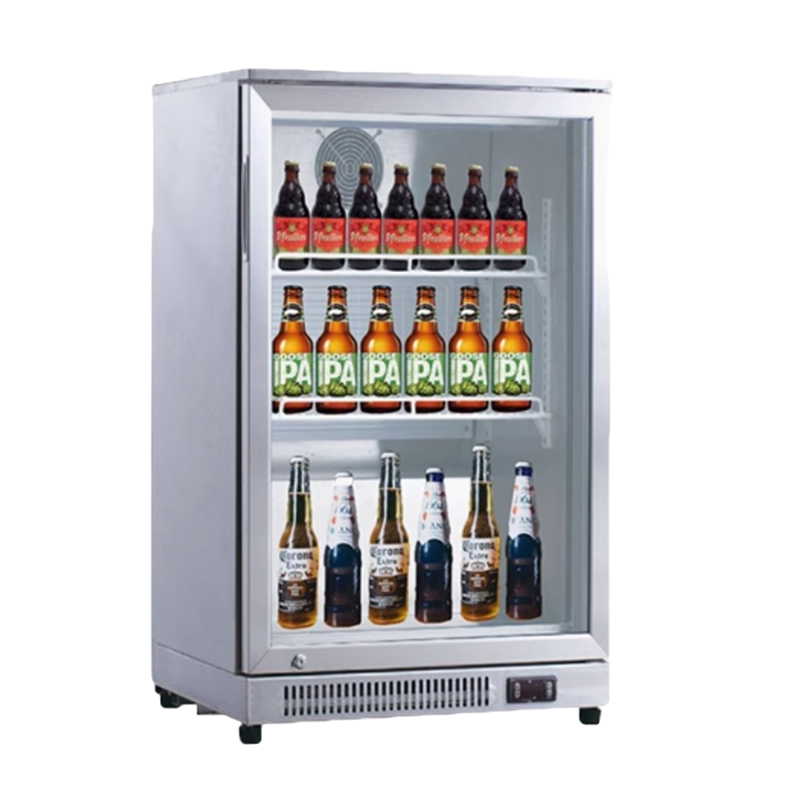
This air-cooled 1-door glass-door back bar fridge features stainless steel construction and a transparent glass door. It efficiently cools and displays various bottled drinks (like craft beer, IPA) — ideal for bars, restaurants to showcase and store beverages attractively.
Why a Fridge Works Better When Full
Did you know that a stocked fridge cools more efficiently?
When the fridge is filled, it only needs to chill a smaller amount of air, which reduces compressor workload. For new fridges, it’s best to load them up and let them run for 24 hours without opening the door. This helps the fridge settle into normal operation, allowing the thermostat to regulate the compressor efficiently.
Waiting After Moving or Transport
Do not switch on any fridge for at least two hours after transport or relocation. Oil and gas inside the compressor need time to return to the correct position. Turning on the unit too soon can cause compressor failure, which is not covered by warranty.
High Ambient Temperatures
High room temperatures slow down cooling. At 30°C and above, the fridge will take longer to reach set temperatures and will consume more energy to maintain them.
Thermostat Variance
Most commercial fridges use electronic thermostats with a 4–7°C variance. For example, if you set the unit to 2°C, the compressor stops at that point but will only restart when the air temperature rises several degrees. The display may show 7–8°C during this cycle. This is normal because the thermostat measures air temperature, not the temperature of the drinks. Even if the air reaches 8°C, the drinks usually rise only to around 4°C and cool quickly once the compressor starts again.
Compressor Cycles
It is normal for the compressor to start and stop multiple times per hour. The number of cycles depends on the temperature setting, room conditions, thermostat variance, and how often the door is opened.
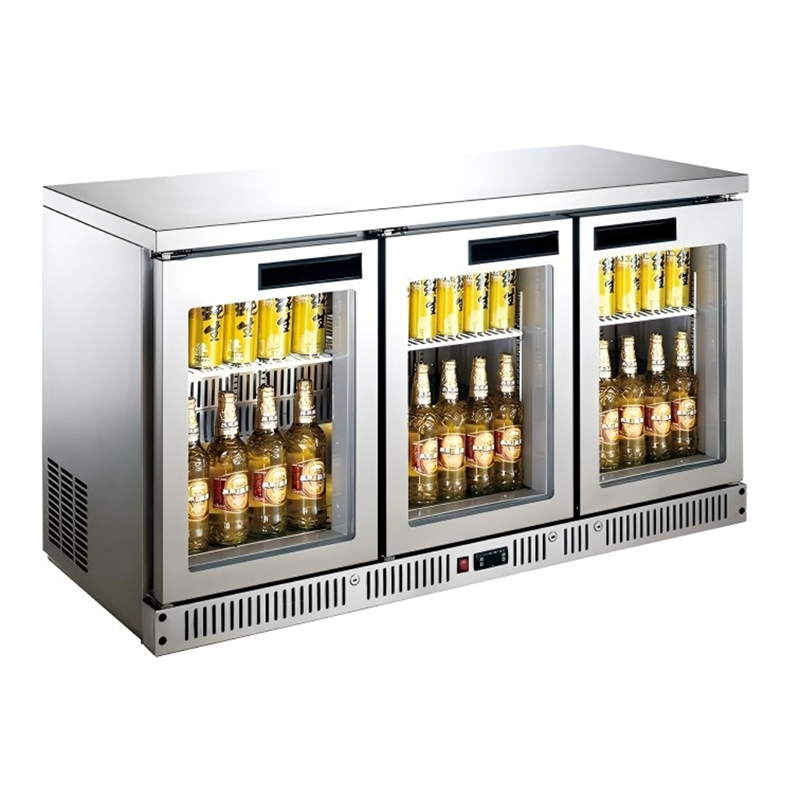
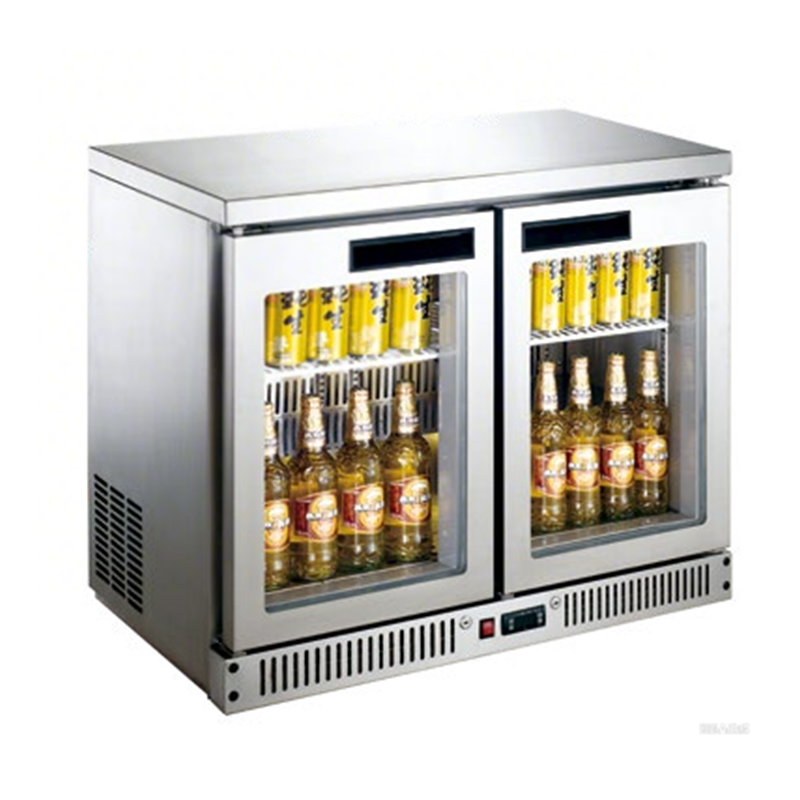
This air-cooled 3-door glass-door back bar fridge has stainless steel construction and transparent doors. It cools and displays drinks (cans, bottles) efficiently, with a flat top for bar use — ideal for bars, restaurants to store/showcase beverages.
Size and Capacity
No matter if the fridge sits at a deli counter for customers or behind the bar for staff, start with the space you truly need. Think about what you will chill and store, such as soft drink cans, beer, or wine, then work out the real amount of stock you must keep cold and ready to serve.
Busy venues with high turnover, including pubs and bars with happy hour rushes, usually suit larger, higher-capacity units like the 3-Door CMONE BF14C3 – GL. Smaller venues often do better with a compact model that saves floor space while still meeting daily demand. Also consider placement and workflow: in many setups, a two- or three-door fridge can be more practical than a single-door option.
Choose a size that matches your needs instead of going too big or too small. Extra space can tempt you to store more than necessary, while a tight fridge can lead to overpacking. Keeping stock levels balanced helps the unit run efficiently and maintain reliably cold drinks.
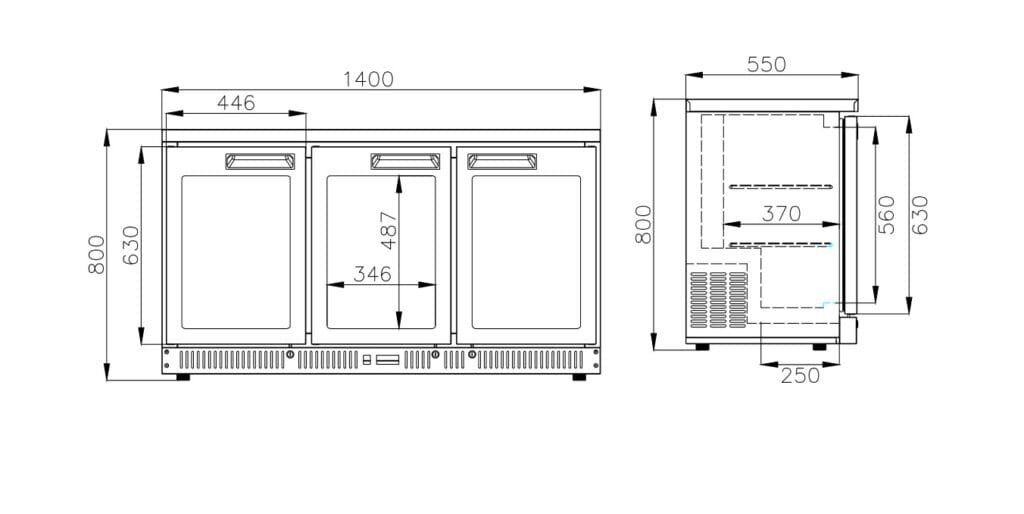
Engineering drawing of an air-cooled 3-door glass-door back bar refrigerator, featuring front/side views with detailed dimensions for manufacturing, installation, and space planning in bars/restaurants.
Temperature Range and Control
Temperature Range and ControlRefrigerators generally use either static or fan-forced cooling. Knowing how each system works helps you pick the right glass-door bar fridge. Commercial fridges tend to be more accurate and display a live temperature reading, while domestic units usually show an average temperature. This means you might notice small variations of a few degrees during use, which is completely normal since refrigeration works in cycles.
If you’re using a commercial fridge for the first time, don’t worry if the displayed temperature shifts slightly. For example, if it’s set to 2℃ but reads 5℃, the cooling process is still functioning properly. These fluctuations are part of the system’s regular operation and will not harm your stored products.
Humidity can also influence how your fridge performs. High moisture levels can cause condensation on glass doors, leading to water pooling on the floor—a safety risk and potential source of damage. For venues in humid areas without air conditioning, a tropical-rated fridge is a smart choice. These models minimize condensation, keeping both your floors dry and your fridge’s contents clearly visible.
Static Cooling
Static cooling is most common in smaller bar fridges and works without an internal fan. Instead, a cooling element—usually positioned along the back wall—releases cold air that naturally circulates as warm air rises, creating a gentle convection current inside the fridge.
This type of cooling is energy-efficient and operates quietly, making it a good fit for quieter settings or limited spaces. However, static cooling takes longer to reach colder temperatures and may create uneven cooling throughout the fridge. Because of this, it’s best suited for products that are less sensitive to slight temperature changes.
Fan-Forced Cooling
Fan-forced cooling uses an internal fan to circulate air and push out warmth, keeping the fridge’s interior evenly chilled. This system ensures consistent temperature throughout, reducing the risk of warm spots that can affect drink quality. It also maintains stable cooling even when the fridge door is opened frequently.
The trade-off is that fan-forced systems generate more noise and consume slightly more energy than static cooling units. Still, they’re the better choice for beverages that need precise temperature control, such as wine or beer.
Fan-Assisted Static Cooling in Commercial Bar Fridges
Fan-assisted static cooling combines the strengths of both static and fan-forced systems. These fridges primarily use static cooling but include a fan to improve air circulation and maintain a lower, more stable internal temperature. This hybrid approach provides consistent cooling across all shelves while remaining energy efficient and quieter than fully fan-forced models.
Energy Efficiency
When choosing a glass-door bar fridge, energy efficiency matters as much as cooling performance. An energy-smart model reduces both your electricity costs and your environmental footprint. Commercial fridges may not have star ratings, but certain design features can help you identify efficient options.
Check the type of refrigerant the unit uses—models with R290-A help cut running costs, while R600A offers a safe, eco-friendly alternative. Look for energy-efficient fridges with LED lighting, strong insulation to retain cold air, and low-energy compressors. These features work together to keep your drinks perfectly chilled while lowering long-term operating expenses.
Shelving and Storage Options
When choosing a glass-door bar fridge, pay attention to the design and flexibility of its shelving. Adjustable shelves are especially useful, allowing you to reconfigure the interior as your drink selection changes. This flexibility ensures your fridge can adapt to seasonal offerings or shifting inventory needs.
It’s also worth checking how strong and easy to clean the shelves are. Since bar fridges see frequent use, durable materials that can handle constant loading and simple wipe-down cleaning will save time and extend the fridge’s lifespan.
Warranty and Support
No matter how you intend to use your glass-door bar fridge, it’s important to choose a model built to last. A solid warranty provides peace of mind and protects your investment over time. Look for brands that back their products with reliable service and responsive customer support, so you can easily get help with maintenance, repairs, or replacement parts whenever needed.
What to Look for in a Glass Door Bar Fridge
The key purpose of a glass-door bar fridge is to keep your drinks cold, but a few extra features can make a big difference in performance and convenience. Beyond size, capacity, cooling type, and energy efficiency, consider options that let you maintain precise control and easy access.
Choose a fridge with digital temperature controls instead of manual dials. This allows for accurate monitoring and helps ensure your beverages stay at the ideal chill. Adjustable temperature ranges are also useful since different drinks, like wine or beer, are best served at slightly different temperatures.
Double-glazed glass doors help maintain consistent cooling and reduce energy loss, even with frequent use.If space is limited, sliding doors are smoother to operate and more convenient to access than standard hinged designs.
Logistical Tips for Buying a Glass Door Bar Fridge
Logistical Tips for Buying a Glass Door Bar Fridge
Before finalizing your purchase, take a moment to review a few key points to make sure your chosen fridge fits your space and long-term needs.
Start by measuring the area where the fridge will go and leave at least 10 cm of clearance around it for proper ventilation. Once you know your available space, decide whether a single-, double-, or triple-door design suits you best, and think about whether hinged or sliding doors will be more practical for your layout.
Next, choose an exterior finish that fits your style and maintenance preferences—options like sleek black or durable stainless steel are both popular choices. Always check the warranty details and the quality of customer support offered by the manufacturer. Finally, research the maintenance requirements to ensure they align with what you can manage.
If you’re comparing a few models and need expert advice, reach out to the CMONE team for personalized recommendations.
How to Maintain Glass Door Bar Fridges
After purchasing your glass-door bar fridge, regular care will help keep it running efficiently and extend its lifespan. Here are the key maintenance steps to follow:
Regular cleaning: Wipe down both the interior and exterior using a mild cleaner and a soft microfiber cloth. This keeps your fridge sanitary and looking professional.
Check the seals: Inspect the door seals often to ensure they’re secure and airtight. Proper seals prevent cool air from escaping, improving energy efficiency and reducing costs.
Monitor the temperature: Minor fluctuations are normal, but significant or ongoing changes could indicate a performance issue. If your fridge isn’t maintaining the set temperature, it may need servicing.
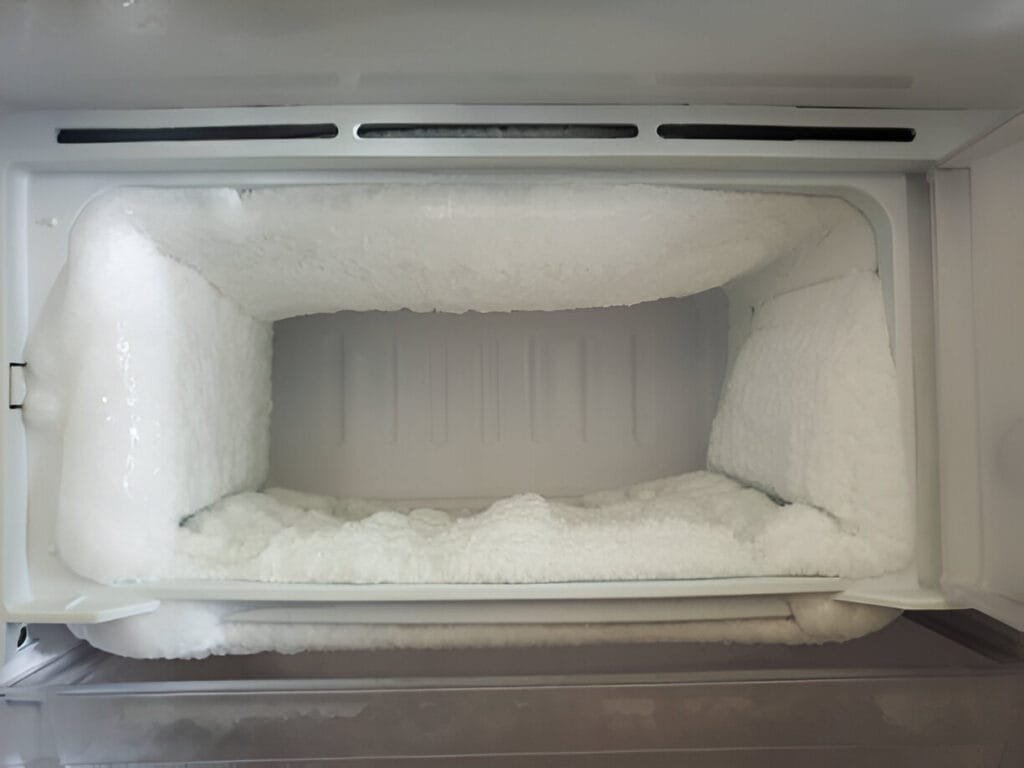
Defrosting: If your fridge doesn’t have an automatic defrost function, schedule manual defrosting to prevent ice buildup. Excess ice reduces storage space and can limit cooling performance.
Clean the filter: For models with evaporator filters, inspect and clean them each month. Dust accumulation restricts airflow and reduces cooling efficiency, so keeping filters clear ensures optimal operation.
Conclusion
For a well-rounded refrigeration setup, consider pairing your glass-door bar fridge with other equipment that suits your menu and storage needs.
Wine Fridges: Ideal for venues offering a wide wine selection, these units let you maintain different temperature zones for optimal serving conditions.
Commercial Drink Fridges: A great vertical option for storing large quantities of soft drinks, beer, or bottled beverages.
Under Bench Fridges: Perfect for busy bars, offering convenient access and added storage for chilled drinks right where you need them.
Pizza Prep Fridges: Excellent for venues that serve both food and drinks, providing space to keep ingredients fresh alongside a dedicated food preparation area.
If you’re upgrading or purchasing a glass-door bar fridge for the first time, the Restaurant Equipment team can help.
Book a free consultation, email dowellinczw@gmail.com or call 17857759967 for expert recommendations.
In today’s fast-paced world, commercial freezers have become an indispensable asset across various industries. Their robust cooling capabilities, large storage capacities, and reliability ensure that businesses can keep products fresh, safe, and ready for customers. But where exactly are these powerful appliances used? Let’s take a closer look at the diverse applications of commercial freezers […]
For businesses, when a freezer ices up, it can disrupt operations and impact equipment lifespan. Addressing the root causes of freezer ice is essential for keeping your freezer running smoothly and ensuring that stored goods remain in optimal condition. This guide explains why commercial freezer Ices up, explores the technical process behind frost formation, and offers practical tips to […]
Fridge Freezing is a common challenge in commercial refrigeration, affecting food quality and business efficiency. Yet, a frequent challenge faced by many businesses is dealing with refrigerator compartments that freeze unexpectedly. This raises a common concern: “How do I stop my fridge from freezing?” Understanding the main causes of fridge freezing, such as incorrect temperature settings or blocked vents, is […]
We use cookies to enhance your browsing experience, serve personalised ads or content, and analyse our traffic. By clicking "Accept All", you consent to our use of cookies.